
A short guide to recent Bordeaux vintages, from 2010 to the latest, 2020: the character of each vintage and what you need to know about it.
The impact of vintage in Bordeaux: weather and terroir
Weather is an essential factor in viticulture, and the way it plays out in each individual growing cycle (which, for the vine, lasts a year) largely determines the quality of the fruit that reaches the cellar.
Depending on the specific characteristics of each broad area (Left Bank or Right Bank), each appellation, each château and each vineyard plot, the weather over the season may favour or penalise a particular grape variety, or indeed the yield of the plot as a whole.
It is no coincidence, then, that vintage is a factor that simply cannot be ignored when it comes to great wines such as those of Bordeaux.
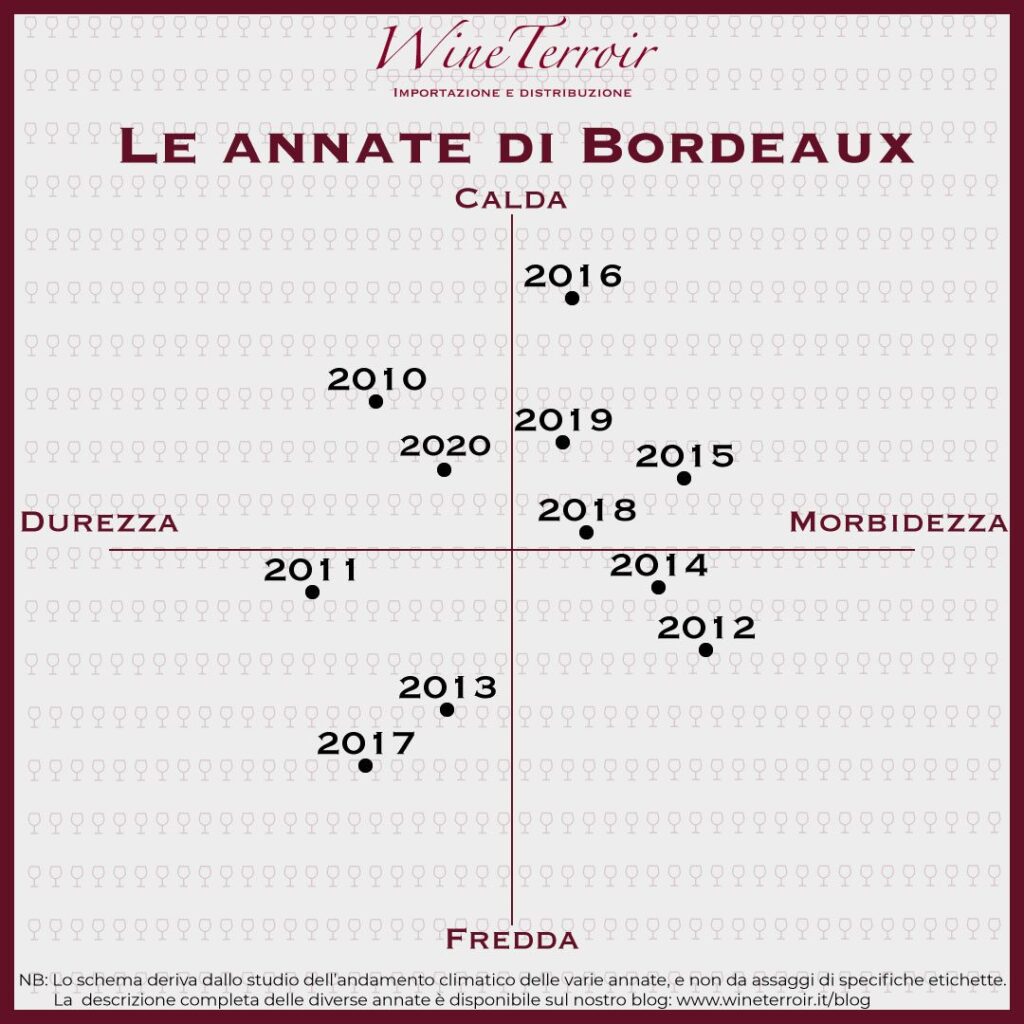
Overview of the last 10 vintages in Bordeaux
Click on a vintage to go straight to its analysis, or scroll down through each vintage in turn: 2020 - 2019 - 2018 - 2017 - 2016 - 2015 - 2014 - 2013 - 2012 - 2011 - 2010
Recent Bordeaux vintages in detail, year by year
Below is a brief but thorough analysis of the vintages of the last decade in Bordeaux, from 2010 to 2020.
- The 2020 vintage in Bordeaux
An interesting vintage for many of Bordeaux's sub-regions, brought in during a harvest shaped by Covid-19, with face masks in the vineyards and safety protocols in the cellars.
The vintage turned out well, despite a cold, wet start to the year with several hailstorms. Spring was then generally wet, with a number of outbreaks of rot and mildew across all of Bordeaux's sub-regions. Mild weather lasted until flowering in May, before changing around June and ushering in a hot and very dry summer.
Good water reserves prevented drought stress in the vines and kept ripening on track, despite no fewer than 54 consecutive days without rain between June and August.
The harvest of red grapes began early, taking place between mid and late September, with yields generally below average.
Fruit quality was nonetheless good, with high sugar levels and good concentrations of polyphenols and aromatic compounds.
- The 2019 vintage in Bordeaux
The vintage began dry and mild, followed by a wetter and cooler than normal spell in April and May. Flowering took place in cool weather, with some rain causing uneven fruit set at times. June then stayed warm until the second half of July, when some light rain cooled the vineyards. August was hot, verging on heat stress, followed by a milder September with some rain after mid-month. Then, between late September and October, during the harvest, warmth and fine weather favoured the final stage of ripening.
Dense red wines, lively yet full-bodied and structured.
- The 2018 vintage in Bordeaux
An unusual year, alternating between cold and heat, rain and drought.
The vintage began cold and rainy: January, March, April and May 2018 all recorded rainfall above the 30-year average, bringing high humidity to the area. Budburst and flowering came late, but in more balanced conditions. From mid-June onwards temperatures rose sharply, giving a very hot, dry summer.
The conditions of the vintage favoured clay and limestone soils, which coped better with drought during ripening.
Rot and downy mildew struck here and there, affecting yields.
The 2018 vintage produced extremely full-bodied, dense, intense and concentrated red wines: wines to leave in the cellar for a long time.
- The 2017 vintage in Bordeaux
The vintage began very cold, with severe frosts that caused damage above all in low-lying areas and those furthest from rivers. The frosts recalled those of the 1945, 1977 and 1991 vintages.
From May and throughout the summer, temperatures rose, though not to normal levels, and the weather was generally very dry, with only a little rain at the end of June. Particularly overcast skies, combined with generally cooler than normal conditions (apart from a few weeks in August), led to a swift harvest to avoid rot, with very low yields.
The conditions of the vintage produced notably fresh wines with good acidity and well-judged, not overly aggressive tannins: an approachable, balanced vintage that is drinking well already.
- The 2016 vintage in Bordeaux
One of the finest vintages of recent years.
A very wet (especially in January) but remarkably mild winter was followed by a generally cool March, April and May across the whole area. Flowering began in June in favourable conditions: after a few more showers, the summer turned out hot and extremely dry.
This favoured clay soils, which are better at retaining water reserves through the drought that marked the summer, whereas sandier soils went through periods of greater water stress. Cool nights offset the hot summer days, and only around mid-September did some rain bring a little relief to the vines' roots. The harvest moved to early October for Merlot vineyards and to the second half of the month for Cabernet Sauvignon and Cabernet Franc.
The conditions of the vintage favoured the ripening of concentrated fruit, with small berries packed with tannin, colour and polyphenols. The result was wines of enormous power and concentration, which won over the public from the outset.
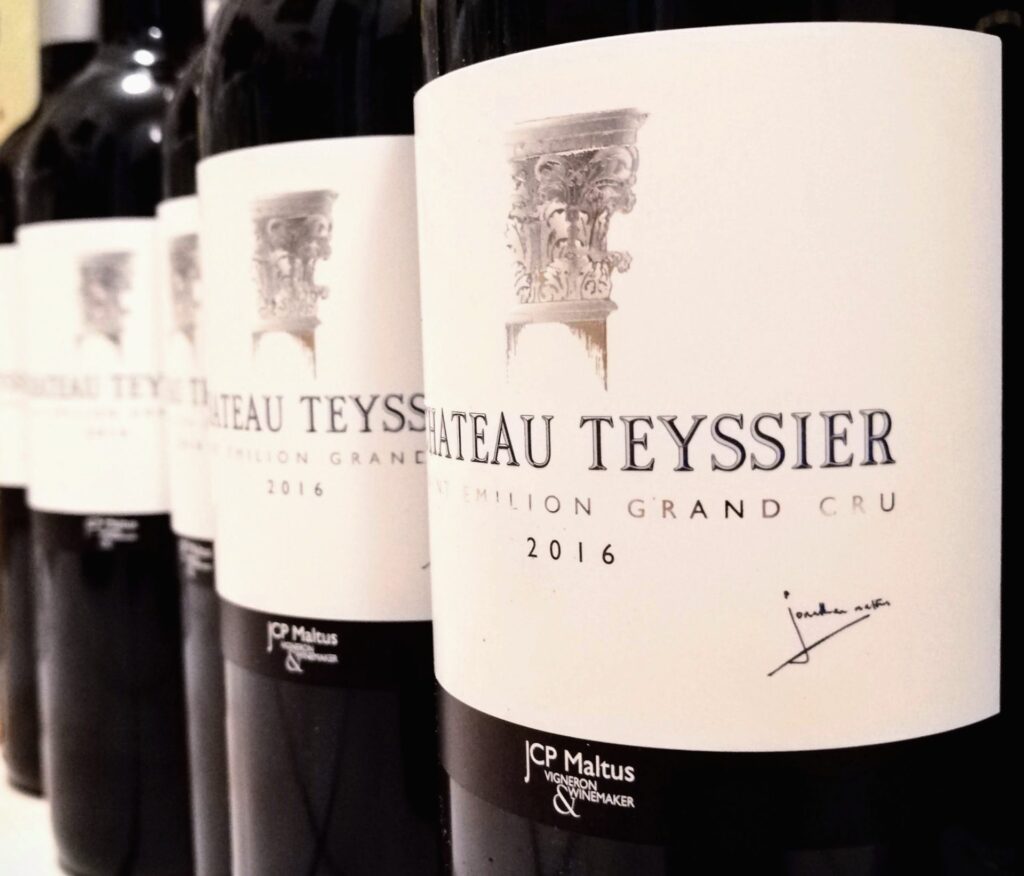
Many 2016 wines received outstanding scores, including Le Dôme from JCP Maltus. You can read WineEnthusiast's report on the 2016 vintage here.
- The 2015 vintage in Bordeaux
The vintage began very dry, following on from a very dry autumn in 2014. Winter was slightly wetter, with some rain at the start of the year, followed by an unusually warm, dry March and April. The rest of the flowering and fruit-set period was marked by heat and a lack of rain, which only arrived around August to moisten the soils. All the warmth of the vintage created the conditions for early ripening, with the harvest starting earlier than usual. From mid-September the weather turned cooler and wetter, with sporadic rain during the various stages of the harvest.
A vintage that favoured vineyards on Bordeaux's Right Bank, especially in Saint-Emilion and Pomerol, producing powerful, energetic wines to be cellared for long ageing.
- The 2014 vintage in Bordeaux
The vintage began with an unusually mild, wet winter, followed by a fairly warm spring that encouraged early budburst. The following weeks, from April to early May, continued warm and largely without rain. In May, humidity and cooler air prolonged flowering, which ended with a hot June.
From then on, the summer weather turned: it arrived with high humidity and frequent scattered storms, and July was fairly cold compared with the average. Only towards the end of August did the weather improve again, allowing the fruit to complete a ripening process that would otherwise have been at risk in September and October.
Vintages like this show how fundamental soil composition is in regulating drainage and the vines' water reserves, favouring limestone soils such as those of Saint-Emilion.
Overall, the 2014 wines proved "more approachable" than other vintages, with good acidity and smoother tannins from the outset. Wines for drinking rather than long cellaring.
- The 2013 vintage in Bordeaux
A difficult, wet vintage that was challenging to manage across the whole Bordeaux area.
Spring was cold and rainy throughout, pushing budburst and flowering well back in the season. The situation persisted through to the end of June, also leading to disease and damp-related damage. At the start of July a heatwave improved matters, but between the end of the month and early August further storms and hail compounded the difficulties. This ill-fated summer resulted in a very late ripening period that was hard to manage because of humidity and rot, forcing vignerons and châteaux to carry out very rigorous sorting in the vineyard.
While Merlot struggled more than Cabernet Franc and Cabernet Sauvignon to reach ripeness, the vintage proved particularly interesting for white grape varieties and for Bordeaux's white wines.
- The 2012 vintage in Bordeaux
The vintage began wet across the whole Bordeaux area, followed by a warmer, drier spell. Flowering and fruit set were uneven and often later than average. The middle of the summer was hot and rainless, favouring clay soils (which tend to retain moisture at depth). At the same time, between late August and September, further rain disrupted the crucial final stage of ripening, favouring free-draining limestone soils. The later rain in October favoured Merlot-based wines, as Merlot is generally harvested earlier than Cabernet Sauvignon and Cabernet Franc. Results for the latter two varieties were more inconsistent, precisely because of the rain that fell during the harvest.
Red wines to drink soon rather than forget in the cellar. The white wines are interesting.
- The 2011 vintage in Bordeaux
A complex vintage, full of pleasant surprises in some sub-regions and with unexpectedly disappointing results in others.
The vintage started dry and relatively warm, with a heat peak around May and some drought and sunburn problems around June. Water stress was felt throughout the first part of the year. The summer then turned wet, with sudden cool spells across the Bordeaux area. The late summer, coinciding with the harvest, partly improved matters with milder, drier weather.
Overall, the vintage hindered the ripening of Cabernet Sauvignon and Merlot, while greatly favouring Cabernet Franc, highlighting its freshness and balance. Blends with a high proportion of Cabernet Franc on Bordeaux's Right Bank, better able to withstand humidity thanks to its limestone soils, fared best.
- The 2010 vintage in Bordeaux
One of the finest vintages of the first decade of the millennium.
A vintage widely described as "classic", with ideal and never extreme weather conditions. A textbook spring, generally dry with average temperatures. During the key ripening phase there was little rain, and only light showers, giving a very dry but not excessively hot summer. During the final stage of ripening, cool and very breezy nights helped to create an excellent balance between concentration and acidity.
A vintage of concentration and power, with high sugar levels leading to high alcohol. Merlot perhaps suffered more from the high alcohol, whereas Cabernet Franc and Cabernet Sauvignon achieved greater balance.
All in all, a wonderful vintage for powerful, austere, tannic and structured red wines built for long ageing, whose development promises to be spectacular in the decades to come.
The information in this article has been gathered and cross-checked from various websites and reports, to provide as objective and realistic a picture as possible.
The most important sources include: WineSpectator.com, JancisRobinson.com, WineScholarGuild.org, Decanter.com, WineMag.com.
Wine Terroir Srls is the exclusive importer and official Italian distributor of the Bordeaux wines of JCP Maltus, Paul Carrille and Château Poesia-Château d'Arce.
For more information, write to us at info@wineterroir.it