

The dishes, ingredients and traditions of Japanese cuisine: far more than sushi and sashimi. Some thoughts on flavours and aromas, along with our food and wine pairing suggestions.
Our series on food and food and wine pairing continues, this time with a chapter on world cuisine. Having looked at a selection of traditional Italian dishes, today we turn to a branch of the Horeca food and wine world that in recent years has captured the interest of sommeliers, and in turn of diners keen on food and wine pairing: Japanese cuisine.
As usual, a general look at ingredients, spices and cooking methods (more important than ever in the case of Japanese cuisine) will be followed by a pairing of each category of dishes with a wine from the Wine Terroir Selection.
The style and culture of Japanese cuisine: restaurants and wine
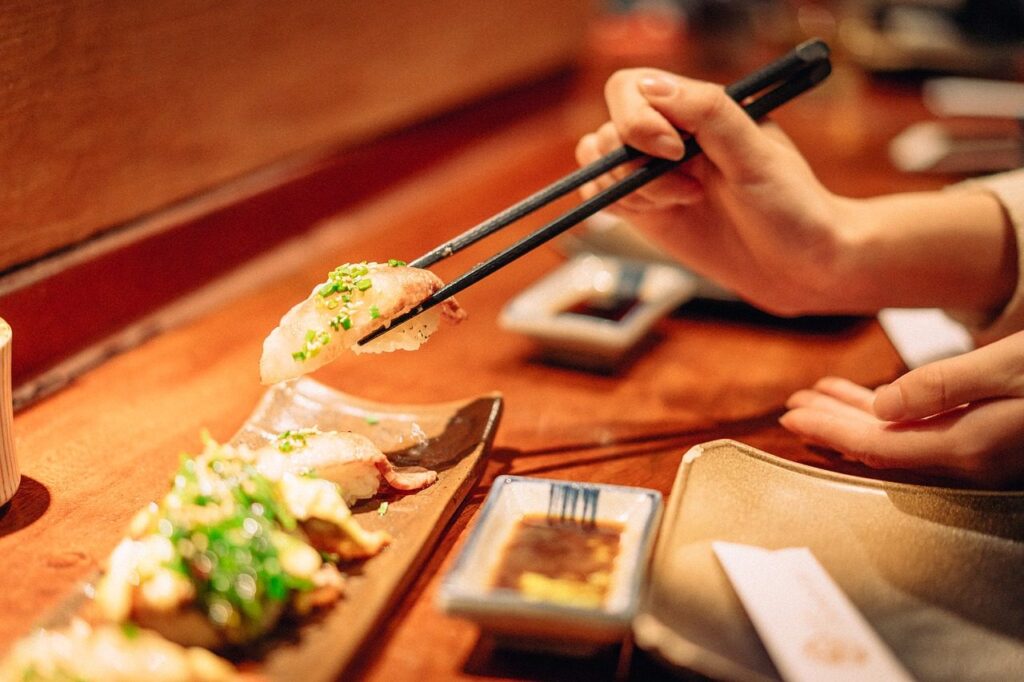
Japanese cuisine is not just sushi and sashimi, yet in Italy these are the two dishes diners know best, and consequently the ones they eat most. Indeed, for the average customer the word "sushi" has become synonymous with "Japanese restaurant".
In fact, sushi is a category of dishes based on fish and rice, but it represents only a small fraction of Japanese culinary culture and of what a good Japanese restaurant has to offer today.
To talk about Japanese cuisine, you need to be able to distinguish between different styles of preparation, cooking, use of spices and marinating. And, crucially for food and wine pairing, you also need to consider how frequently the flavours change: think, for example, of Kaiseki cuisine, where the courses are small and highly varied, and are traditionally served all together – creating a composition of different dishes on the table.
Dishes may be served cold (as with Nigiri or many Uramaki) or hot. This is the case, for example, with Ramen (vegetable, meat or fish broths with noodles, or "tagliolini", made from various types of flour), Katsuobushi (dried and often smoked tuna flakes), Tofu, Miso (fermented soybean paste), various kinds of meat (often white meat), and much more besides.
Which wine should you pair with such a varied range of dishes and preparations? What rules should guide a "Japanese cuisine and wine" pairing?
Rice and starch-based dishes: pairing with Alsace Riesling
Let's start with dishes containing rice, such as Uramaki, Chirashi and Nigiri, or another starchy element, such as the noodles in Ramen. In all these cases, a key factor to bear in mind when devising a food and wine pairing is precisely starch, a member of the carbohydrate family. Starting from the starch, you can then go into more detail on spices and cooking methods.
For pairing the starch-based dishes of Japanese cuisine, we have chosen a grape variety that works across the board with this cuisine: Riesling.
Specifically, we suggest the Riesling Grand Cru Schlossberg from Domaine Bernard Haas.
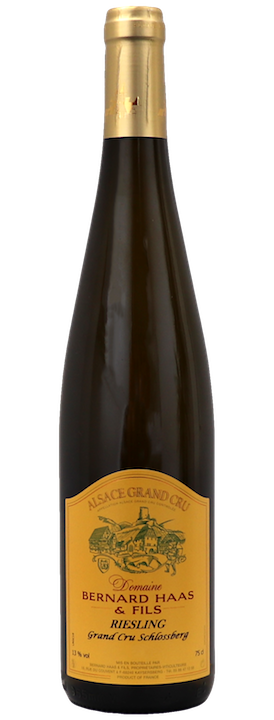
Domaine Bernard Haas, Riesling Grand Cru Schlossberg
Riesling from Alsace proves capable of partnering both cold dishes such as Uramaki and Nigiri and hot dishes. Thanks to its 9 g/l of residual sugar, the Riesling Grand Cru Schlossberg pairs well with the rice used in cold fish-based dishes such as Nigiri. The rice in Japanese cuisine is quite particular: after cooking it is seasoned with rice vinegar and sugar. This means that pairing it with a wine whose residual sugar is too low would risk creating too sharp a contrast with the dish, leaving an unpleasant sense of acidity on the palate. At the same time, with hot dishes such as Ramen with noodles, you need to take into account the use of ginger. An almost ubiquitous ingredient in Japanese cuisine, ginger takes very kindly to the petrol notes that characterise this variety, which thus complement the more intense aromas.
Having to hold its own across such a varied range of dishes, united by a strong starchy base, the Riesling we propose offers a perfect balance of mineral, floral (acacia and cherry blossom, evoking Japan) and fruity notes.
Raw fish dishes: pairing with Crémant d'Alsace
Now let's turn to another category of typical Japanese dishes: those made with various kinds of raw fish, such as sashimi. The most common cuts of fish when it comes to sashimi are undoubtedly tuna, salmon and sea bass.
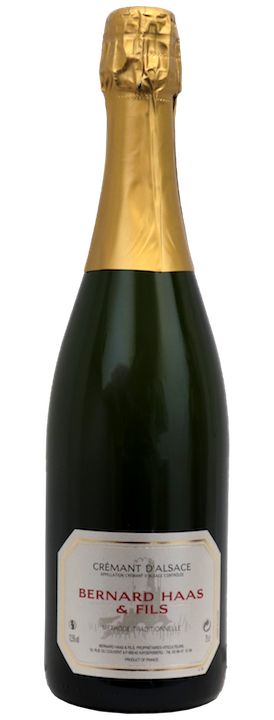
Domaine Bernard Haas, Crémant d'Alsace Brut
For pairing the raw fish dishes of Japanese cuisine we stay in Alsace, but choose a sparkling wine: the Crémant d’Alsace Brut from Domaine Bernard Haas. This is a traditional-method (méthode champenoise) sparkling wine made from 90% Pinot Blanc and 10% Pinot Gris, which spends a minimum of 15 months on the lees before disgorgement and release.
Pinot Blanc is a variety that gives the wine freshness and good acidity, with a light body but an aromatic bouquet of floral and fruity notes, crisp apple and slightly underripe peach. Pinot Gris, on the other hand, is a variety that offers greater complexity, especially in Alsace. Blended with Pinot Blanc, it gives the glass a more complex bouquet with notes of smoke, ginger, honey and dried fruit.
These two varieties, with Pinot Blanc to the fore, work together perfectly alongside raw fish dishes, where the bubbles must not overpower the flavour and savouriness of the fish (as might happen with a Champagne): from the fattier cuts (such as tuna and salmon) to the more delicate ones (sea bass, or even a crustacean such as prawn), Crémant d'Alsace pairs with and complements the fish thanks to its freshness and finesse.
White meat dishes: pairing with Sauvignon Blanc from Pouilly
Japanese cuisine is not based solely on fish dishes, however; on the contrary, there are plenty of meat-based preparations – especially white meat. These are often cuts of chicken or pork, which undergo various preparations before final cooking, such as marinating.
The marinades are often liquids made with acidic, umami and spicy ingredients: think soy sauce, ponzu sauce or fresh ginger.
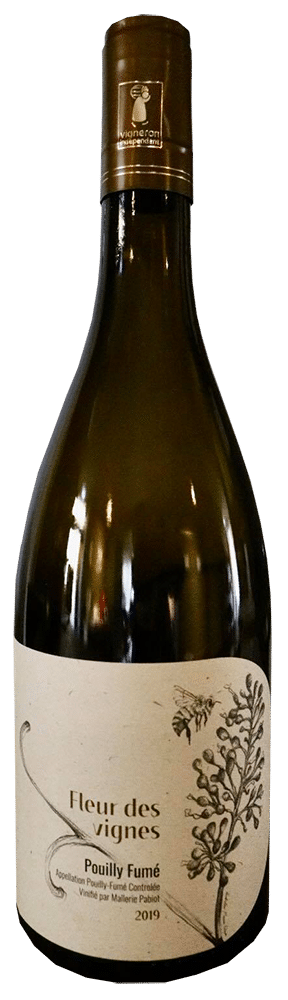
Dominique et Mallorie Pabiot, Pouilly-Fumé Fleur des Vignes
For pairing the white meat dishes of Japanese cuisine we move to the Loire, to Pouilly-sur-Loire, and choose the Pouilly-Fumé Fleur des Vignes from Dominique et Mallorie Pabiot.
This is a white wine made from 100% Sauvignon Blanc, grown in its heartland (the Pouilly terroir) on a vineyard plot farmed biodynamically (uncertified). The resulting Sauvignon Blanc is a medium-bodied wine, able to stand up to the structure of the meat. Above all, it is a variety with aromatic characteristics intense enough to "accompany" the aromas and spices from the marinade. The wine's sensory profile, ranging from herbaceous and wild-flower notes to riper hints of yellow fruit, with touches of flint, sits well with many of the most commonly used flavourings. In particular, the meat often carries slightly spicy notes from the fresh ginger and more savoury, umami flavours from the soy sauce. Dressing the meat after cooking with teriyaki sauce, which leans towards sweetness, is also common.
Thanks to its structure and sensory profile, Sauvignon Blanc manages to accompany all these flavours and aromas without clashing even with the spiciest notes (as might happen with a red wine).
And you, dear restaurateur friends, how would you pair your Japanese dishes with the wines of the Wine Terroir Selection? We are very curious to find out, and we invite you to send us your pairings and photos: we will be delighted to share them!
Wine Terroir Srls is an importer and distributor of French and international wines exclusively for the Horeca trade in Italy.
Discover our services and our catalogue, or send us an email for more information!