

A journey through the regions and wines of Spain: the grape varieties, the appellations and the emerging trends in the Spanish wine scene
This article offers an in-depth look at the Wines of Spain, focusing on the predominant grape varieties, the best-known wine appellations and the emerging trends in the wine sector of Spain. From a professional perspective tailored to the Horeca trade, we will explore the distinctive characteristics of each Spanish wine region, offering a detailed view of the climatic influences, viticultural practices and winemaking particularities that shape the varied wine offering of Spain.
Along the way, we will examine the different wine regions, the native grape varieties and the impact of climatic conditions on the style and quality of Spain's wines.
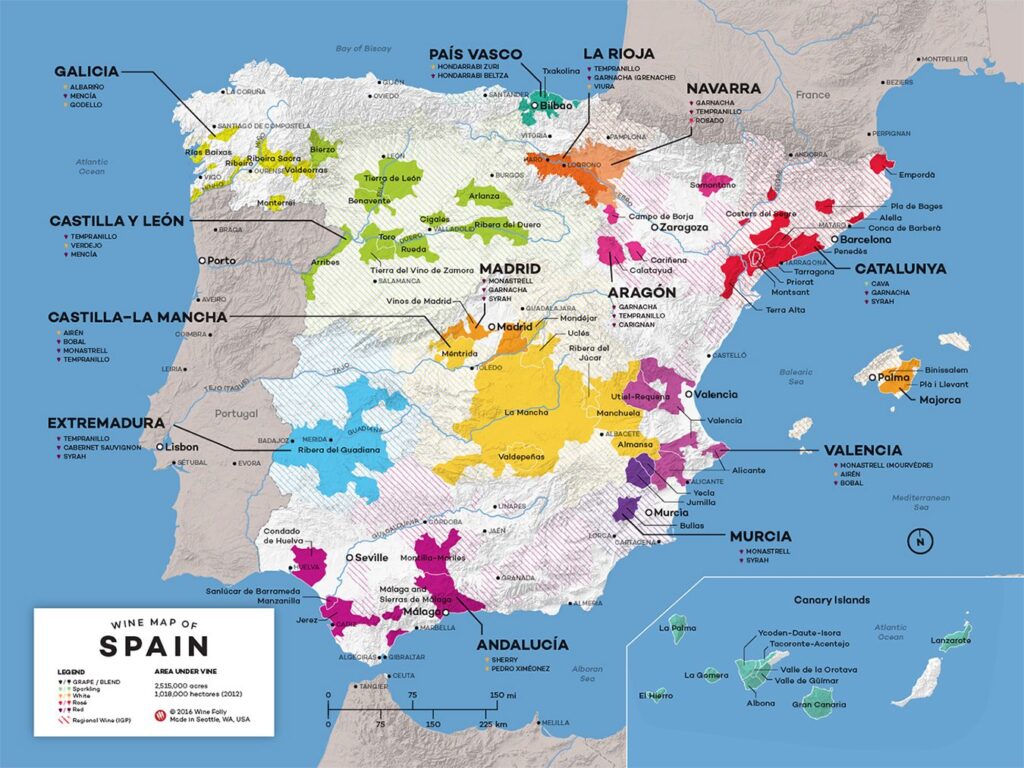
Wine map of Spain - Copyright winefolly.com
The Climate Zones of Wine-Growing Spain: An Overview
Spain, renowned for the diversity of its landscapes, is home to a wide range of climates that directly influence the country's wine production. These climatic variations, ranging from maritime-oceanic to Mediterranean and continental, play a crucial role in determining the grape varieties grown and the style of the wines produced. In this overview, we will examine the impact of the different climate zones on Spanish viticulture and winemaking, exploring the unique nuances that characterise the wines of Spain.
Coastal Zone (Northern Coast and Atlantic Coast)
Spain's coastal zone stretches along the country's northern and Atlantic coastlines and is characterised by a moderate maritime-oceanic climate.
The influence of the Atlantic Ocean brings mild summers and moderate winters, with abundant rainfall spread evenly throughout the year. These climatic conditions favour grape varieties that thrive in cooler, more humid environments, such as Albariño and Godello among the whites, and Mencia among the reds.
The wines produced here are known for their freshness, lively acidity and distinctive aromatic character.
Inland Continental Zone (Central Plateaus and Inland Valleys)
Spain's interior comprises the central plateaus and inland valleys, characterised by a continental climate with significant diurnal temperature variation. Summers are hot and dry, while winters can be harsh. These climatic conditions create an ideal environment for robust grape varieties such as Tempranillo and Garnacha.
The wines produced here are renowned for their structure, complexity and ageing potential.
Mediterranean Zone (Mediterranean Coast and South-East)
Spain's Mediterranean zone stretches along the Mediterranean coast and the south-east of the country, characterised by a hot, dry Mediterranean climate. Summers are hot and dry, with mild winters and moderate temperature variation, especially in the lower-lying areas. These climatic conditions favour grape varieties that thrive in hot, sunny environments, such as Garnacha, Monastrell and Moristel.
The wines produced here are known for their richness, concentration and intensity of flavour.
Further inland, however, valley slopes can rise above 800 metres, creating microclimates also suited to white grape varieties such as Macabeo and Xarel.lo, which are also used to make traditional-method sparkling wine.
Spain's Climate Zones and Their Grape Varieties
Coastal Zone (Northern Coast and Atlantic Coast):
Appellation
Main grape varieties
Climatic characteristics
Resulting style
Rias Baixas
Albariño
Moderate maritime-oceanic climate with heavy winter rainfall and mild summers.
Fresh, aromatic, high-acid white wines with notes of citrus, green apple and white flowers. Viticulture is often affected by rain, requiring careful vineyard management. Vinification in stainless steel to preserve freshness and aroma.
Ribeira Sacra
Mencía, Godello
Mountainous terrain with steep slopes and an Atlantic climate shaped by the ocean.
Fragrant, vibrant red wines with hints of red fruit, spice and earthy notes. White wines with good acidity, often notably structured. Heroic viticulture on steep terraces demands manual work and particular attention to vineyard management. Vinification in neutral (old) wood to enhance the wines' complexity without imparting new-oak aromas.
Would you like to discover our producers from this part of Spain? Here they are: Adega Pedralonga and Adega Entrecantos
Inland Continental Zone (Central Plateaus and Inland Valleys):
Appellation
Main grape varieties
Climatic characteristics
Resulting style
Rueda
Verdejo
Continental climate with hot summers and cold winters, influenced by the Duero river and altitude.
Fresh, aromatic white wines with notes of citrus, herbs and flowers. Viticulture on sandy soils requires substantial canopy management to maintain the balance between sugars and acidity. Vinification in stainless steel or concrete to preserve freshness and fruit expression.
Cebreros
Garnacha
Continental climate with significant diurnal temperature variation.
Intense, spicy red wines with hints of ripe red fruit, spice and earthy notes. Viticulture on limestone soils requires careful vigour management to ensure optimal ripening of the grapes. Traditional winemaking with ageing in wood to enhance the depth of the wines. A new wave of young growers is bringing experimentation with qvevri amphorae and concrete eggs.
Ribera del Duero
Tempranillo (Tinto Fino), Cabernet Sauvignon, Merlot
Continental climate with hot, dry summers and cold winters.
Robust, structured red wines with notes of black fruit, spice and vanilla. Viticulture on limestone and clay soils requires careful management of ripening to obtain high-quality grapes. Traditional winemaking with long ageing in oak barrels to give the wines complexity and depth.
Would you like to discover our producers from this part of Spain? Here they are: El Lagar de Moha and Origen Viticultores
Mediterranean Zone (Mediterranean Coast and South-East):
Appellation
Main grape varieties
Climatic characteristics
Resulting style
Rioja
Tempranillo, Garnacha, Graciano, Mazuelo, Tinta Velasco, Pasera, Macabeo (Viura), Garnacha Roya
Mediterranean climate with continental influences, with cold winters and hot, dry summers.
Elegant, complex red wines with notes of red and black fruit, vanilla and spice. Viticulture on clay and limestone soils requires careful management of ripening to maintain the balance between acidity and sugars. Traditional winemaking with long ageing in oak barrels. Rioja is divided into three sub-zones: Rioja Alta, Rioja Baja and Rioja Alavesa. Rioja Oriental, with a hotter, drier climate, is emerging as an area of growing interest for high-quality wine production, thanks above all to a new generation of young growers committed to experimentation.
Cava
Xarel.lo, Macabeo, Parellada
Mediterranean climate with mild winters and hot, dry summers.
Fresh, aromatic sparkling wines with notes of white-fleshed fruit, flowers and smoky citrus. Earthier, more complex notes emerge in wines with a high proportion of Xarel.lo. Viticulture on limestone soils requires careful management of ripening to obtain high-quality grapes with the right levels of acidity. Traditional-method winemaking with second fermentation in bottle to produce fine, persistent bubbles. Alongside a small group of huge industrial producers, more and more small growers are now emerging with high-quality wines made solely from their own estate vineyards ("Elaborador Integral" certification).
Somontano
Native varieties: Moristel, Parraleta, Garnacha;
Cabernet Sauvignon and Merlot in the more commercial wines
Continental climate with Mediterranean influences, with significant diurnal temperature variation in the highest parts of the appellation on the steep slopes of the Pyrenees
The native varieties yield lighter, leaner red wines with notes of red fruit, herbs and spice. Viticulture on alluvial soils on the valley floor and sandier soils on the mountain slopes: here in particular, a high proportion of very old, bush-trained vines requires skilled management to ensure optimal ripening of the grapes. Traditional vinification in concrete, with ageing in wood to add depth and complexity to the wines.
Would you like to discover our producers from this part of Spain? Here they are: Cava Avinyo, Vinos en Voz Baja and Origen Viticultores
Wines of Spain: Conclusions
In conclusion, this detailed look at Spain's different wine regions has highlighted the richness and diversity of the country's wine offering. From the fresh, aromatic Albariño of the coastal zone to the complex, structured expressions of Tempranillo and Garnacha in the interior, right through to the lively sparkling wines of Cava in the Mediterranean zone, the wines of Spain offer a wide range of styles and aromatic profiles.
Through careful management in both vineyard and cellar, Spanish growers succeed in bringing out the full potential of native grape varieties and international ones alike, giving their wines a unique and distinctive character. With the rise of trends such as the promotion of Rioja's sub-zones, natural and low-intervention winemaking with indigenous yeasts, and the growing interest in native grape varieties such as Moristel and Parraleta in regions like Somontano, Spain's wine scene continues to evolve and to surprise wine lovers around the world.
Ultimately, the exceptional diversity and quality of Spain's wines make them an undeniable opportunity for discovery and sales for Horeca professionals and restaurateurs open to the international wine scene, promising unique and unforgettable tasting experiences for wine lovers at remarkable value for money.
Wine Terroir Import imports and distributes Spanish and international wines for the Horeca trade: all the Spanish growers listed on this page are part of our portfolio. Email us for information and orders!