


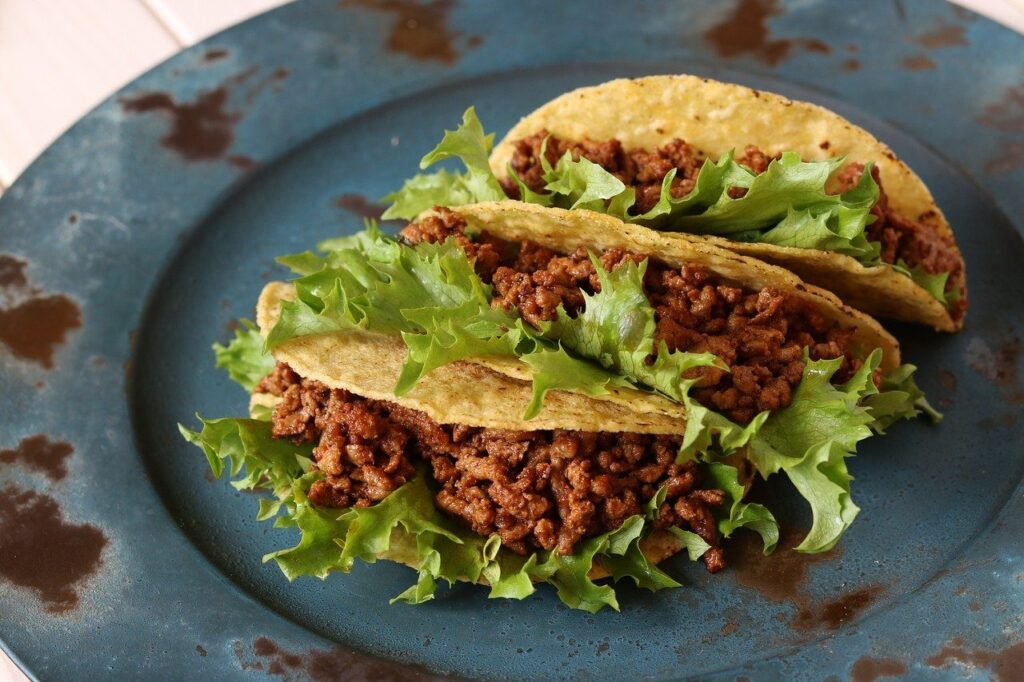
Can an aromatic, spicy cuisine with a distinctly American flavour be paired with wine? An analysis of its various organoleptic components, and our food and wine pairing suggestions
In this instalment of our series devoted to food and food and wine pairing, we turn to another international chapter, this time from the Americas. Having already covered traditional Italian cuisine and Japanese cuisine, today we look at a cuisine that is certainly more of a niche in the Horeca food and wine world: Tex-Mex. But be warned: being a niche cuisine does not mean it cannot capture the interest of sommeliers and become an increasingly fertile testing ground for food and wine pairing. Tex-Mex also lends itself very well to eating at home, whether through takeaway or delivery, or by recreating the dishes in one's own kitchen. Understanding what to pair with these dishes is therefore important for wine shops, bottle shops and wine bars focused on off-premise sales, as it allows them to advise their customers better.
We will start with some general reflections on the ingredients and spices
common in Tex-Mex cooking (where chilli is undoubtedly the trickiest spice), followed by the pairing of each category of dishes with a wine from the Wine Terroir Selection.
The Tex-Mex restaurant style: bold ingredients and flavours
The term Tex-Mex refers to a culinary style that fuses American (Tex) and Mexican (Mex) cooking. As the name suggests, the American side is mostly the cuisine native to Texas.
Texas is, in fact, separated from Mexico only by the Rio Grande along its south-western border. Tex-Mex is therefore a frontier cuisine, born of the union of two different and often conflicting cultures.
Typical Tex-Mex dishes share a number of recurring ingredients: tacos, beans, various kinds of meat, stewed vegetables, spices and so on. Among them, the most famous and best known in Italy (and therefore the most commonly eaten) are undoubtedly:
Burritos: a rolled wheat-flour tortilla with a filling of meat (chicken, pork or beef), vegetables and sauces
Fajitas: "DIY" dishes similar to burritos, where each diner chooses their own filling; the tortillas are served separately with a selection of fillings, allowing for tasty and ever-changing combinations
Tacos: a crisp, toasted corn tortilla filled with meat (chicken, pork or beef) and vegetables
Chilli con carne: a meat stew (often beef) with beans, tomatoes and other vegetables (including peppers) and hot spices (chilli first and foremost)
Quesadilla: considered a starter, made with a toasted tortilla filled with melted, stringy cheese and often vegetables.
Tex-Mex cuisine: a solution for food and wine pairing
This brief overview of some of the most typical and popular dishes in Italy shows that Tex-Mex cuisine is predominantly meat-based. Alongside the meat, the common thread running through most dishes is often guacamole, made from a base of avocado and lime, which accompanies the various dishes.
Nor can we forget the spices, which are very important in Tex-Mex cooking. The most widely used, and also the trickiest to handle in food and wine pairing, are chilli and cumin.
Which wine should you pair with Tex-Mex dishes? This is a cuisine whose common base is almost always meat – be it chicken, beef or pork. The most critical element to consider for the pairing, however, is chilli: heat is one of wine's “enemies”. More precisely, spicy food heightens the perception of alcohol and bitterness, while at the same time diminishing the sense of “body” and fruit aromas in the wine. Cumin, for its part, also complicates the pairing, being a strongly aromatic spice with a sweet touch.
Tex-Mex red meat dishes: pairing with Cahors
A close look at the various recipes reveals that the key differentiator between all the dishes is the type of meat used. All the other ingredients are more or less ever-present, with only the cooking method changing – and without this significantly altering the organoleptic impact.
Following this division, we will first pair the red meat dishes, and then the white meat dishes.
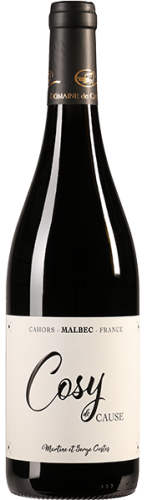
Domaine de Cause, Cahors Cosy
To pair with Tex-Mex dishes based on red meat (such as beef), we have chosen the Cahors Cosy from Domaine de Cause.
The Cahors appellation lies in south-west France, south of Bordeaux. Here the leading red grape is Malbec, a very dark-skinned variety that yields intense, enveloping wines with aromas of dark fruit (cherries, plums and blackberries) and balsamic, almost herbaceous notes. Domaine de Cause's Cahors Cosy is a red wine made from 100% Malbec, aged partly in stainless steel (to preserve the freshness of the fruit) and partly in used wooden barrels, to soften its edges and give the wine greater roundness.
The result is a wine with present yet soft, sweet tannins that are never harsh: this allows the wine to stand up to the structure of the meat without the tannins becoming unpleasant under the effect of the heat. At the same time, the freshness and intensity of the fresh fruit can hold its own against the bold spices, which tend to overpower a wine's aromas.
Tex-Mex white meat dishes: pairing with Mondeuse
Keeping the same conditions already considered for the red meat dishes (chilli, spices, vegetables, etc.), we now move on to the next category.
For dishes based on white meat (such as chicken or pork), we switch wines for a lighter, more harmonious pairing.
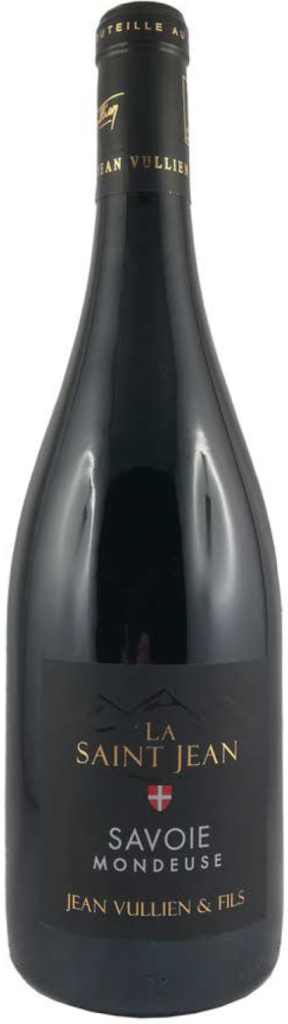
Domaine Jean Vullien, Mondeuse La Saint Jean
To pair with the white meat dishes
of Tex-Mex cuisine, we have chosen Mondeuse La Saint Jean from Domaine Jean Vullien.
Mondeuse is a native grape of Savoie, a region in south-eastern France nestled against the Alps with views of Mont Blanc. Within the Savoie wine region, Saint Jean De La Porte is a small cru (around 12 hectares in total) devoted exclusively to growing Mondeuse.
Domaine Jean Vullien's Mondeuse La Saint Jean is aged in stainless steel only, preserving a distinctly fresh and fruity character. The resulting wine offers a broad bouquet of dark flowers (violet, hibiscus, geranium) and very pronounced berry fruit, with subtle spicy notes. This aromatic profile makes it excellent with a spicy, demanding cuisine such as Tex-Mex, ensuring the glass always tastes fresh and fruity. It also has good acidity (remember the temperate Alpine climate) and very soft, enveloping tannins: essential qualities, as we have seen, for pairing with spicy food. The body that the Mondeuse grape gives the wine is lighter and more delicate, making it well suited to meats of more moderate structure such as chicken or pork. Finally, do not underestimate its pairing with cheese-rich dishes (such as quesadillas), where the acidity cuts through the fat of the dairy, while the softness and dominant berry fruit accompany each mouthful, leaving the palate pleasantly clean and refreshed.
And you, dear restaurateur friends, how would you pair your Tex-Mex dishes with the wines of the Wine Terroir Selection? We are very curious to find out, and we invite you to send us your pairings and photos: we will be delighted to share them!
Wine Terroir Srls is an importer and distributor of French and international wines exclusively for the Horeca trade in Italy.
Discover our services and our catalogue, or send us an email for more information!