


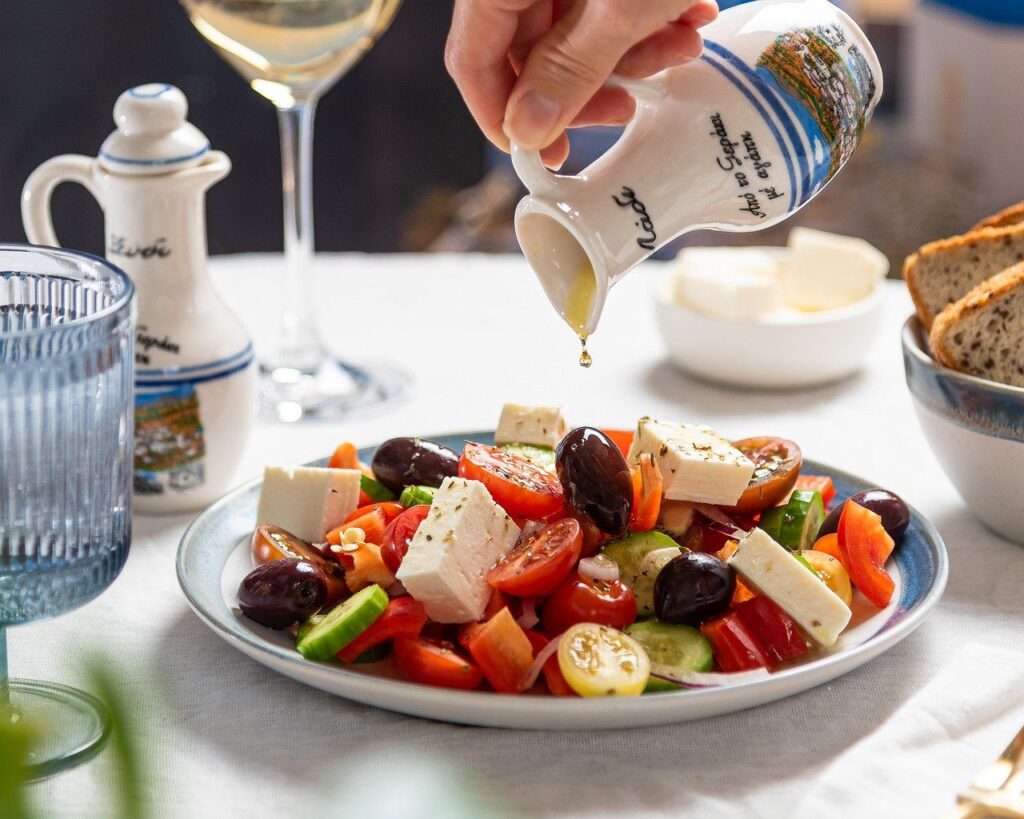
A Mediterranean cuisine defined by its generous use of aromatic herbs: an analysis of its different organoleptic components and our food and wine pairing suggestions
In this instalment of our series on cuisine and food and wine pairing, we return to Europe and turn our attention to one of the Mediterranean cuisines best loved in Italy: Greek cuisine.
Missed our previous articles on food and wine pairing? Here you can find traditional Italian cuisine, Japanese cuisine and Tex-Mex cuisine.
Greece, as we know, is home to a great many typical native grape varieties, and numerous ampelographic studies have shown that many varieties actually originated in Greece. Its wealth of history and food and wine culture is remarkable, and it represents an irresistible challenge for any sommelier tasked with pairing Greek dishes with wine.
What's more, Greek food is increasingly enjoyed at home, whether as takeaway, through delivery or even cooked from scratch. Knowing what to pair with these dishes is therefore important for wine shops, bottle shops and wine bars selling wine to take away, as they can better advise their customers on how to make a Greek dinner perfect.
As always, we will start with some general observations on the style of the most common dishes and ingredients in Greek cuisine (which, as we shall see, is highly aromatic), followed by an example pairing of a category of dishes with a wine from the Wine Terroir Selection.
The style of Greek cooking: Mediterranean influences and aromatic herbs
Talking about Greek cuisine inevitably means talking about a style of cooking that belongs to the “Mediterranean” food and wine cultures. With much of the country looking out onto the Mediterranean Sea, seafood is used extensively. But that's not all: it is also a cuisine that makes generous use of aromatic herbs to season dishes and create complex, refreshing sensations on the palate.
Grilled fish and meat seasoned with various aromatic herbs are a frequent sight on Greek tables, but the category of dishes that perhaps most defines Greek cuisine is the "Mezé".
Mezé are a series of small, tempting dishes, usually served as starters and accompanied by the ever-present warm pitta bread.
Many Mezé are vegetarian, and the best known include:
Dolmades, vine leaves stuffed with rice
Tzatziki, a yoghurt-based sauce with garlic, mint and cucumber
Melitzanosalata, a smoked aubergine dip
Saganaki, a traditional cheese, breaded and fried
The list of Mezé could go on and on. Another factor to bear in mind when considering food and wine pairings for these dishes is garlic. Garlic often features in Mezé dishes, together with mint, which adds a strongly aromatic note.
So which wine should you pair with dishes like these from Greek cuisine? Having looked at a range of dishes, we can suggest two examples representing two different sides of Greek cooking, along with possible pairings for each.
Greek dishes and wine: pairing Mezé with Champagne Rosé
As we have just seen, Mezé are a cornerstone of Greek cuisine, and many of them are vegetarian. The non-vegetarian ones, on the other hand, are often seafood-based: notable examples include fried calamari, marinated octopus and Taramosalata, a dip made from fish roe.
The possible combinations of flavours and aromas are endless, and the use of aromatic herbs and plants such as garlic calls for a wine with enough organoleptic intensity while also being versatile.
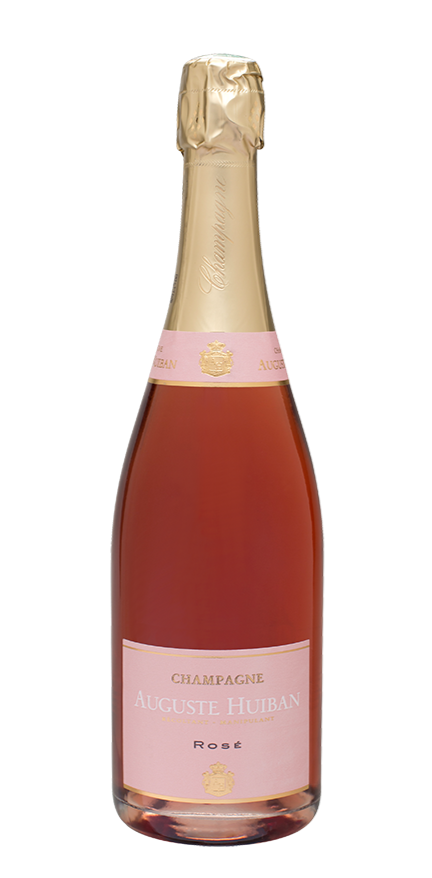
Champagne Auguste Huiban Rosé
To pair with Greek Mezé, we have chosen a sparkling wine: the Champagne Rosé Brut from Auguste Huiban - La Maison Huiban.
This sparkling wine comes from the western part of Champagne, the Vallée de la Marne, and is made from 90% Pinot Meunier and 10% Pinot Noir. It is a so-called "Non Vintage" Champagne, without a declared vintage, which rests for an average of 36–40 months before disgorgement and has a Brut dosage of 6 grams per litre.
Since versatility is essential, Mezé being small and varied dishes (several are typically served at the same time during a meal), Champagne is a natural choice. On the nose it offers a fresh, lightly fruity bouquet, above all small red berries (raspberries, redcurrants and wild strawberries), which pair well with the aromatic herbs in the Mezé without overpowering them. On the palate it shows Champagne's typical acidity, heightened by the effect of the perlage (the bubbles). The good structure provided by the red grape varieties (Pinot Meunier and Pinot Noir) also makes it a match for dishes with more complex, structured flavours, such as the smoked aubergine dip. At the same time, thanks to its acidity, Champagne is well suited to fried dishes, where the palate needs refreshing and cleansing: fried calamari or Saganaki, for example.
Greek dishes and wine: pairing Moussaka with Syrah
Greek cuisine is, of course, not just about Mezé. As mentioned at the outset, many traditional dishes are based on fish and meat, often simply grilled and served with olive oil, lemon and aromatic herbs.
However, Greek cuisine also has other signature dishes that are richer and more structured in flavour. One of these is Moussaka. Essentially, it is a bake of fried aubergines, lamb ragù and béchamel, cooked and browned in the oven.
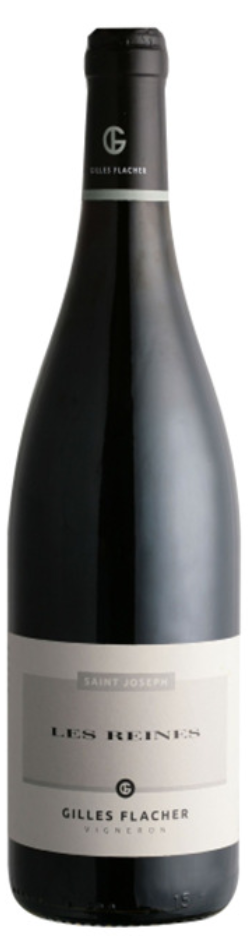
Domaine Gilles Flacher, Saint-Joseph Les Reines
To pair with Moussaka, a classic dish of Greek cuisine, we have chosen the red Saint-Joseph Les Reines from Domaine Gilles Flacher.
The Saint-Joseph appellation lies in the northern Côtes du Rhône, in the north of the Rhône Valley. It is an appellation devoted to Syrah, which covers most of its vineyards. Les Reines is in fact a red wine made from 100% Syrah which, after a long maceration, is aged for 12 months in barriques, 20% of them new and the remainder used barriques of various ages.
Syrah is known above all for giving wines their characteristic spicy notes, thanks to an aromatic compound in which it is particularly rich (rotundone). Alongside the typical black pepper spice, this Syrah also shows very pronounced dark fruit (black cherry, plum, blueberry, blackberry). Nor should we forget the influence of the oak used for ageing, which brings darker notes (cocoa, tobacco and subtle balsamic hints). The result is a wine of medium-high structure, with good body and present yet supple tannins: important qualities when pairing with a complex dish such as Moussaka. Because the aubergine is fried, it needs a wine with a good level of tannin to stand up to the richness of the frying. At the same time, the lamb and the spices call for a wine with long aromatic persistence and a sufficiently complex profile to support the ragù. Thanks to its body and aromatic breadth, the Syrah Les Reines accompanies and balances the different flavour components of Moussaka, leaving the palate clean after each sip, with a light spiciness from Syrah's signature character.
And what about you, dear restaurateurs: how would you pair your Greek dishes with wines from the Wine Terroir Selection? We would love to know, so please send us your pairings and photos: we will be delighted to share them!
Wine Terroir Srls imports and distributes French and international wines exclusively for the Horeca trade in Italy.
Discover our services and our catalogue, or send us an email for more information!